|
Getting your Trinity Audio player ready...
|
Who says only Brits get annoyed at the sound of certain American words or phrases? British English can every so often be just as bewildering to Americans. However, while most Americans are familiar with words and phrases like “bloke”, “pissed drunk”, or “wanker”, the following 30+ British slang phrases are confusing to most Americans. So, if you really want to make your American friends go bonkers (the British way of saying “go nuts”), you tell them this:
– British slang goes well beyond the words American TV has already exported, and the 30+ phrases here still leave most US visitors guessing.
– Region shapes the phrase: Cockney rhyming slang, Scottish sayings, and West Country expressions each confuse in their own way.
– Literal readings rarely help, since “bite your arm off” is pure enthusiasm, while “I’m off to Bedfordshire” means nothing more than bedtime.
– Some come with backstories: “bee’s knees” took off in the 1920s, and “Bob’s your uncle” is popularly traced to Victorian political nepotism.
– A phrase misread over a pint is funny; one misread in your UK campaign isn’t – that gap is what localization closes.
30+ Funny British Slang Phrases and Their Meanings
The list below runs from everyday fillers to regional oddities, in no particular order of strangeness. Each entry explains what the phrase means, where it came from when anyone actually knows, and how to drop it into conversation without raising eyebrows.
● Any road
This does not mean “choose your path” or “pick a road”. It’s a quirky way to say “anyway”, “in any case”, as in, “ Any road, it’s out of your hands”
● A load of tosh
When something is complete nonsense or rubbish, this is what the Brits call it. Imagine you’ve been toiling away at a research paper, and your professor qualifies it as “a load of tosh”. That’s … ouch!
● A kent face
No, no, don’t be misled by the mention of a familiar name. This British slang phrase has nothing to do with the region in the UK. Not even remotely. Widely used in the highlands of Scotland, it means “a familiar face”, deriving from the Scottish English verb “ken- kenned (or kent)”, meaning “to know”. “I saw a kent face at the grocery store.”
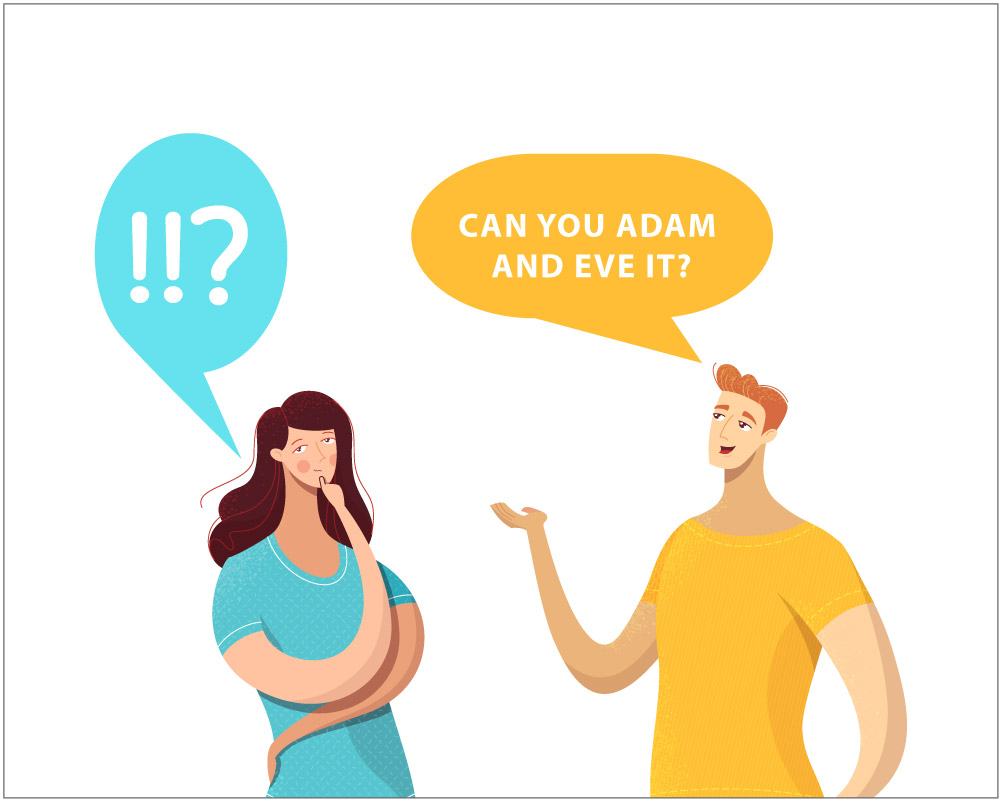
● Adam and Eve
Can you Adam and Eve it? That’s Cockney slang to you. It means “believe”.
● Arse over tit
When you’ve had a shot too many of Tequila, you’re very likely to experience this nasty, unpleasant, not at all dignifying episode (for the lack of a better word) of falling over due to a temporary loss of balance because of being what the Brits so eloquently call “arseholed” or “inebriated” (to use a proper word).
● Bee’s knees
Yet another funny misleading masterpiece of British slang that has nothing to do with the buzzy, honey-making insects and their knees, this phrase became popular in the 1920s along with “cat’s whiskers”, which means “excellent”.
● Bite your arm off
Not to be taken literally! This idiom shows a willingness to do something, like an extra hand when you need one. “She’ll bite your arm off if you run this errand for her”.
● Bits ’n’ Bobs
Often used to suggest a random selection of things. “There’s bits ’n’ bobs in the fridge if you’re starving”.
● Brassed off
No one can hide their feelings better than the Brits (no offence). They have plenty of words and ways to creatively express their unhappiness with the state of things. This one means annoyed or fed up, as in “He was well brassed off about the delay”.
● Bob’s your uncle
This one may not be so unfamiliar to cartoon lovers, especially if you’ve watched 101 Dalmatians 101 times in a row if you remember the conversation between Cruella’s henchmen, Jasper and Horace, when the puppies outsmart them. Then, Jasper tells Horace, “We’ll run ’em down before you can say ‘Bob’s your uncle’”, meaning “easy as pie” or “piece of cake”. But how did this funny slang phrase come about?
Initially, when Lord Salisbury, the 20th British Prime Minister, introduced it, it meant you could get anything done if you’re connected with the right people. Lord Salisbury is famous for appointing his nephew to a high-profile political position.
● Cheesed off
You wouldn’t be too happy to find out the cheese has gone off, would you? Well, nothing more creative to say you’re upset about something. You can use it in both formal and informal contexts like “I’m cheesed off that you dashed out without saying ‘Goodbye’”.
● Chin wag
That’s a funny Welsh phrase meaning “empty cup”. At least, that’s what it meant originally. It is believed to emanate from a pub in North Wales where the mistress made sure everybody would have had a glass too many to drink by the time they left. In time, it has undergone a meaning expansion, coming to signify a long chat.
● Cream crackered
The world would be so dull without Cockneys, wouldn’t it? Even when they’re knackered or dead tired, Cockneys still have fun saying they’re “cream crackered”.
● Curtain twitcher
We all have a few nosy neighbours, don’t we? That’s the word for it.
● Don’t teach your grandmother to suck eggs
Usually, a senior would tell this to a youngster when the young one is being disrespectful or trying to outwit the senior.
● Daft cow
Used among friends, this British slang phrase suggests a female friend is, said or did something silly.
● Donkey’s years
To a Brit, that’s a hell of a long time.
● Effing and blinding
When someone’s effing and blinding, they are using bad language.
● Get an earful
When you get an earful, you’re being scolded or told off.
● Go to a do
When you’re invited to a do, don’t say nay – because you’re invited to a party.
● His Majesty’s Pleasure
When your friend takes a holiday at HMP (His Majesty’s Pleasure), they’ve served their sentence (which could be a few good months in prison). Whoops! S..t happens.
● Full of beans
If you’re all pumped up, you can say you’re full of beans.
● Knees up
When the party gets wild, you go knees up.
● You’re all bum and parsley
The Scots know better. You guessed it, this is a quirky Scottish phrase, and it applies to someone who’s too full of themselves, a know-it-all kind, or plainly, a bit of a bragging sass mouth.
● Happy as a pig in muck
Exhilarated, thrilled, super happy (nothing to do with the “mucky” image).
● I’m off to Bedfordshire
No connection to the place. It’s just a funny way of saying you’re going to hit the hay, call it a day, or just go to bed.
● Not give a monkey’s
Monkeys are mischievous by nature, and this phrase could not have depicted that better. But give a monkey’s what? That’s another story, and there’s been a lot of debate around that thing. Suppose you can use your imagination here. However, the meaning of this phrase is “could not care less” or “be indifferent”.
● It’s brass monkeys outside
This means it’s bitterly cold. The saying also alludes to the brass handles, which tend to get cold.
● It looks like a bit black over Bill’s mother’s
To a non-Brit, this does not mean anything. It is believed to be an allusion to William Shakespeare (Bill) and his mother, Mary Arden of Stratford, who must have been standing in the cold rain for quite a while… Speculation aside, the meaning of this saying is that it’s raining heavily. Synonym: It’s raining cats and dogs. (Not men)
● That’s the badger
Widespread in the West Country, this is to say you’ve finally found what you were looking for. Or when you remember something long forgotten.
● Making a right pig’s ear of something
Whenever you mess things up, that’s the name for it. Something like, “Gosh, she made a right pig’s ear of that book review.” So, you’d better think twice and do things once, as they say.
● You’re peckin’ me ’ead
Ever had that feeling that you have a woodpecker in your head? Oh yes, we all know what it’s like to have someone nagging you all the time. You’d better run. So, the meaning of this idiom is “You are soooo annoying.”
● Throw a wobbly
This phrase became popular in the 1970s. Nobody knows how it came about. Only one thing is certain – its meaning, “throw a temper tantrum”. That’s what a wobbly is – a fit of anger, a whim.
Why British Slang Trips Up Americans
Geography does much of the confusing. England alone packs dozens of dialects into an area smaller than Alabama, so an expression can change meaning, or vanish entirely, within fifty miles. Cockney rhyming slang adds its own puzzle, swapping the word you mean for a phrase that rhymes with it. That’s how “cream crackered” from the list above stands in for “knackered”, and unless someone hands you the key, no amount of context will let you in.
For brands, the lesson is less about memorizing thirty phrases and more about respecting how a market actually talks. Slang is the quickest test of whether copy sounds local, and one retired or misused expression is all it takes for UK readers to spot the text as an import.