linkedin px ads

10 Endangered Languages you Didn’t Know Were Dying

|
10 Endangered Languages you Didn’t Know Were Dying

Font size:

Getting your Trinity Audio player ready...
According to InfoPlease, there are around 6,500 spoken languages in the world today. Believe it or not, a large number of these are at risk of extinction and being completely forgotten. Some are spoken by people in the thousands, while others have just one remaining speaker left in the world – yes, one!

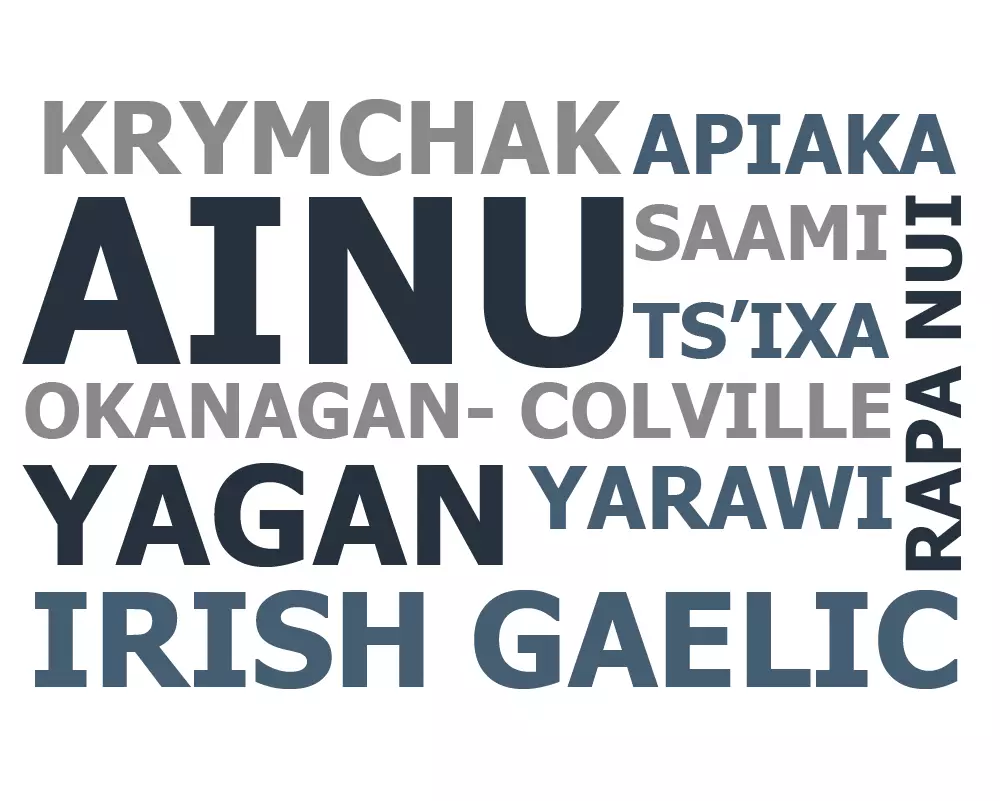
To find out what they are, scroll down to discover 10 of the most endangered languages of today…
Key Takeaways:
  • Of the roughly 6,500 languages spoken worldwide, a significant share faces extinction – some with just a single fluent speaker left.
  • Endangered doesn’t always mean tiny: Irish Gaelic has over 70,000 daily speakers yet remains classified as vulnerable by linguists.
  • Three languages on this list – Yagan, Yarawi, and Apiaka – were each down to just one known speaker at the time of documentation.
  • Many endangered languages disappear not because their communities shrink, but because younger generations switch to dominant languages like Spanish, Portuguese, or English.
  • Preservation efforts range from government school programs (Irish Gaelic) to language documentation projects and textbooks (Okanagan-Colville, Apiaka), with mixed results.

1.Irish Gaelic

Thought the Irish only spoke in English? Wrong! In fact, Ireland’s 2022 Census recorded around 72,000 daily speakers across the country, with about 20,000 of those in designated Gaeltacht communities. Despite nearly 1.9 million people claiming some ability in the language – and decades of government-backed education programs – habitual use continues to decline, particularly among younger generations, leading it to be classified as vulnerable.

2.Krymchak

Rarely heard of, and incredibly at risk is Krymchak, a language spoken by the Crimea people, a peninsula of Ukraine. Also referred to as “Krimchak” and known as Judeo-Crimean Tatar, this tongue was reported to have around 200 native speakers in 2007, but that number has since dropped sharply – recent estimates suggest only a handful of elderly speakers remain. Despite Krymchak being spoken by a small number of people in Ukraine, Pangea offers Ukrainian or Russian translation services in its place!

3.Saami

Listed in our top 11 Nordic languages, Saami, which is actually a family of languages is yet another tongue that is close to extinction. Spoken in Norway, Sweden, Finland, and Russia, this language is used by around 25,000 to 35,000 people in these Northern regions. It is used by the older generations, and doesn’t look to be lasting past another century or so.

4.Ts’ixa

Shua, spoken in Botswana, has another language closely related to it, known as Ts’ixa. Also referred to as Ts’exa, this endangered tongue in Botswana is apparently only spoken in the village of Mababe, by fewer than 200 people. It is used mainly by adults, while children prefer to use Setswana or English as their native tongue.

5.Okanagan-Colville

Okanagan-Colville is a scarce language, mainly used by communities in British Columbia, Canada. Spoken by just 150 speakers, this Native American language also known as Nsyilxcən, is facing immense extinction in today’s day and age. The Catalogue of Endangered Languages, or ELCat, however, have managed to preserve areas of the language through a number of resources like videos.

6.Rapa Nui

Another language facing extinction is none other than Rapa Nui. This unique tongue is used on Easter Island, a volcanic island in Polynesia. According to a 2025 UNESCO report, only about ten percent of young people on the island now speak it fluently – down from seventy-six percent just four decades ago. Today, the primary language used on this famous island is, in fact, Spanish.

7.Ainu

Gravely in danger, and classified as critically endangered by UNESCO, is the language of Ainu – spoken by only a few people in Japan. Estimates suggest fewer than 15 fluent speakers of this East Asian language remain, all elderly members of the Ainu community in Hokkaido. However, revitalization efforts are underway: Japan’s Upopoy National Ainu Museum, which opened in 2020, now serves as a center for language preservation and cultural education. Those looking to target communities in Japan can opt for Japanese translation services by Pangea. The language is spoken by over 125 million people, after all.

8.Yagan

It doesn’t get more shocking or sadder than this. Yagan was, until recently, fluently spoken by just one person – Cristina Calderón, an elder of the Yaghan community in Chile’s Tierra del Fuego. Calderón passed away in February 2022 at the age of 93, and the language is now classified as extinct. Before her death, she helped produce the Yágankuta dictionary with her granddaughter, ensuring at least some record of Yagan survives for future generations. This video captures an elder speaking Yagan – a rare glimpse of the language as a living tongue.

9.Yarawi

Yarawi is a dying language used in the Morobe Province. Considered a Papuan language, it is said to belong to the Binanderean family of the Trans-New Guinea phylum of languages. Although mainly spoken during the 20th century, Yarawi is currently used by just one person. Natives are now more popularly using the language of Binandere, instead.

10.Apiaka

Apiaka’s last fluent speaker, Pedrinho Kamassuri, died in 2011, and the language is now considered extinct. Apiaka was used by the indigenous people of the same name in Mato Grosso, Brazil. This one-of-a-kind language has been replaced by the language of Portuguese by the Apiaka tribe. Many have attempted to bring the language back to life, particularly through the initiative of the “Apiaka Word” textbook.
Want to target similar markets? You can order Portuguese Brazilian translations from Pangea Localization Services, instead!


As a professional translation company, we make sure to offer quality translation and localization services in alternative languages to the dying ones listed above. Whether it’s Spanish, Japanese, or Portuguese, we’ve got the team to help your content get captured by any local audience. Worried about targeting a community that uses an endangered language? Just get in touch with Pangea to find out how we can help!

FAQ

What makes a language endangered?

Linguists typically classify a language as endangered when it is no longer being passed from parents to children as a first language. UNESCO uses a scale ranging from “vulnerable” to “critically endangered.” The classification considers factors like the number and age of remaining speakers, whether the language is used in education, and how the community views its survival. Even languages with thousands of speakers can qualify if intergenerational transmission has broken down.

How many languages disappear each year?

By some estimates, a language goes silent roughly every two weeks – though the exact rate is hard to track because many disappear without any formal documentation. UNESCO considers around 40 percent of the world’s languages to be at some level of risk. The pace of loss is widely expected to accelerate as globalization deepens and smaller communities face increasing pressure from majority languages.

Can an extinct language be revived?

It has happened before. Hebrew was a dormant liturgical language for centuries, yet it was revived as a spoken everyday language starting in the late 19th century. Today, it is the native tongue of millions in Israel. That kind of full-scale revival remains rare, but smaller revitalization programs – using immersion schools, community workshops, and digital archives – have helped keep other endangered languages alive.

What is the most endangered language in the world?

There is no single answer, because hundreds of languages worldwide have fewer than ten remaining speakers. Organizations like UNESCO and the Endangered Languages Project track critically endangered languages across every continent, from the Amazon to Siberia to the Pacific Islands. What they share is a common pattern: the remaining speakers are elderly, intergenerational transmission has stalled, and without active intervention, silence is likely within a generation.

Share this article!
Pangea Localization Services

SEND US YOUR REQUEST