|
Getting your Trinity Audio player ready...
|
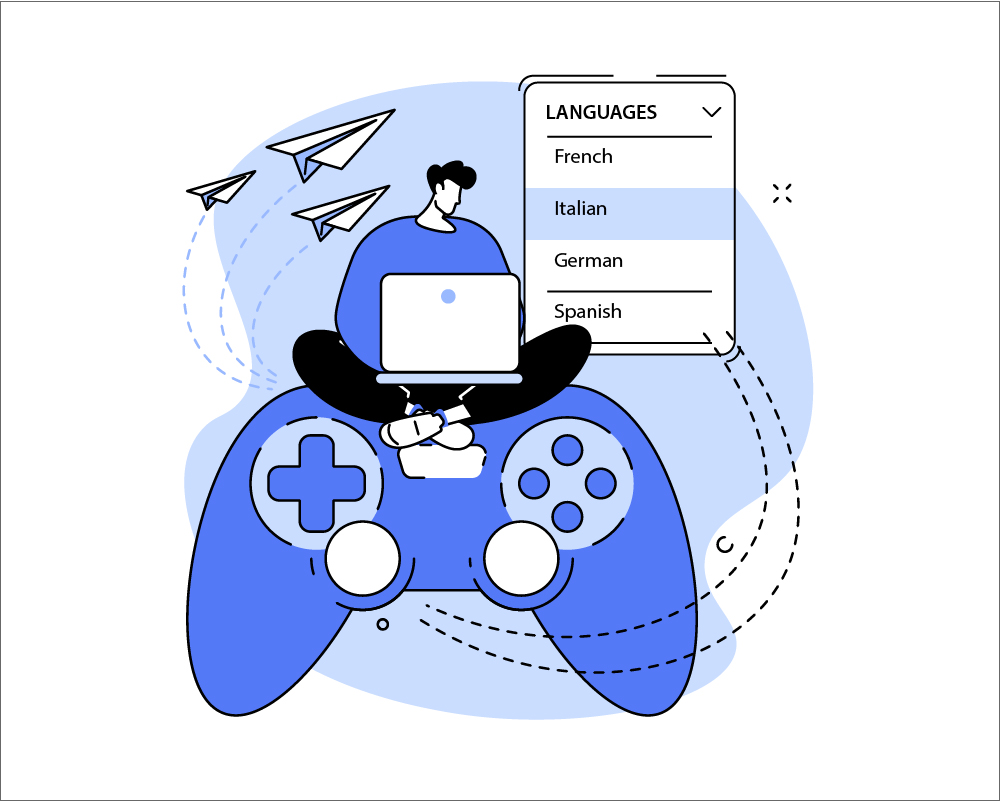
If you’re new to the translation world, you may be wondering what is meant by the term “FIGS”. No, we’re not talking about the tasty fruit here, but rather, the abbreviation which stands for the four most common languages for translation and localization – French, Italian, German, and Spanish.
As a gaming brand or game developer, you may want to know which languages to approach for your target market. According to Newzoo, the FIGS languages still remain strong in the game translation and localization sector. So without further ado, Pangea uncovers the top 4 languages and markets that are suitable for game localization.
As a gaming brand or game developer, you may want to know which languages to approach for your target market. According to Newzoo, the FIGS languages still remain strong in the game translation and localization sector. So without further ado, Pangea uncovers the top 4 languages and markets that are suitable for game localization.
French
Other than France, French is also widely spoken in countries such as Belgium, Luxembourg, Monaco, Switzerland, Canada, Haiti, Madagascar, Mali, Nigeria and many more.
According to Newzoo (2025), France ranks 7th globally with $4.1 billion in revenue and over 40 million players, making it one of Europe’s largest gaming markets. Console gaming leads in France, followed by PC and mobile. If you’re looking to attract the French market, be sure to select the correct format – France French or Canadian French. If you’re confused by this, feel free to discuss it with our project managers!
If you’re looking to attract the French market, bear in mind that PC is the most common platform for gaming in France as well as mobile. Also be sure to select the correct format whether it is France French or Canadian French. If you’re confused by this, feel free to discuss it with our project managers!
According to Newzoo (2025), France ranks 7th globally with $4.1 billion in revenue and over 40 million players, making it one of Europe’s largest gaming markets. Console gaming leads in France, followed by PC and mobile. If you’re looking to attract the French market, be sure to select the correct format – France French or Canadian French. If you’re confused by this, feel free to discuss it with our project managers!
If you’re looking to attract the French market, bear in mind that PC is the most common platform for gaming in France as well as mobile. Also be sure to select the correct format whether it is France French or Canadian French. If you’re confused by this, feel free to discuss it with our project managers!
Italian
Besides Italy being the official home for Italian, this language is also used in countries like San Marino, Switzerland, Vatican City, Slovenia and Croatia.
According to the EF English Proficiency Index 2025, Italy ranks 59th out of 123 countries with moderate English proficiency. In other words, not many Italian citizens have great proficiency in the English language – this further highlights the requirement of Italian translation and localization for your gamers. IIDEA reports that the Italian gaming market reached €2.4 billion with 14 million gamers in 2024. This makes one-third of Italy’s population (aged 6-64) gamers. Mobile and console are the most popular platforms and the top game genres include action games, shooters and sports games such as EA Sports FC.
According to the EF English Proficiency Index 2025, Italy ranks 59th out of 123 countries with moderate English proficiency. In other words, not many Italian citizens have great proficiency in the English language – this further highlights the requirement of Italian translation and localization for your gamers. IIDEA reports that the Italian gaming market reached €2.4 billion with 14 million gamers in 2024. This makes one-third of Italy’s population (aged 6-64) gamers. Mobile and console are the most popular platforms and the top game genres include action games, shooters and sports games such as EA Sports FC.
German
German is a prominent language in Europe and is mainly used in countries such as Germany, Austria, Switzerland, Liechtenstein, and Luxembourg. Although Germans have high proficiency in English, gamers would undeniably be more attracted to your game if it was served in their language.
Believe it or not, Germany actually has the largest video game market in Europe. According to Newzoo (2025), the market ranks 5th globally with $7.0 billion in revenue and over 53 million players. Mobile games are the most popular, however other channels such as YouTube and Twitch tend to attract gamers too, which makes the requirement of video translation and localization even more necessary.
Believe it or not, Germany actually has the largest video game market in Europe. According to Newzoo (2025), the market ranks 5th globally with $7.0 billion in revenue and over 53 million players. Mobile games are the most popular, however other channels such as YouTube and Twitch tend to attract gamers too, which makes the requirement of video translation and localization even more necessary.
Spanish
With Spanish being one of the most popular languages in the world, game localization in Spanish is essential.. It also happens to be the third most used language on the internet after English and Chinese.
Spanish is spoken by more than 600 million people worldwide – including over 500 million native speakers – in countries such as Spain, Mexico, Colombia, Argentina, Peru, Chile, and more.. The language is split into EU Spanish and Latin Spanish. EU Spanish can be heard in Spain, while Latin Spanish is used in the Latin American market. If you’re interested in Spanish translation, our project managers can direct you to the most suitable linguist for the role.
Mexico alone has around 78 million players and ranks 10th globally with $2.7 billion in revenue (Newzoo, 2025). Spain adds another 20 million players and around $2.6 billion (AEVI, 2024). Together, these numbers make Spanish game localization a must for developers targeting Latin America and Europe.
Mobile precedes all gaming platforms as the most popular, while console games have also gained dominance in the Spanish market.
Spanish is spoken by more than 600 million people worldwide – including over 500 million native speakers – in countries such as Spain, Mexico, Colombia, Argentina, Peru, Chile, and more.. The language is split into EU Spanish and Latin Spanish. EU Spanish can be heard in Spain, while Latin Spanish is used in the Latin American market. If you’re interested in Spanish translation, our project managers can direct you to the most suitable linguist for the role.
Mexico alone has around 78 million players and ranks 10th globally with $2.7 billion in revenue (Newzoo, 2025). Spain adds another 20 million players and around $2.6 billion (AEVI, 2024). Together, these numbers make Spanish game localization a must for developers targeting Latin America and Europe.
Mobile precedes all gaming platforms as the most popular, while console games have also gained dominance in the Spanish market.
Are you eager to start your career in game translation? Check out available opportunities on Jooble and get started today.
If you are interested in localizing your game or mobile application into one of the FIGS languages, get in touch! We’ve got over 900 native linguists and localizers ready to take your project on board!