|
Getting your Trinity Audio player ready...
|
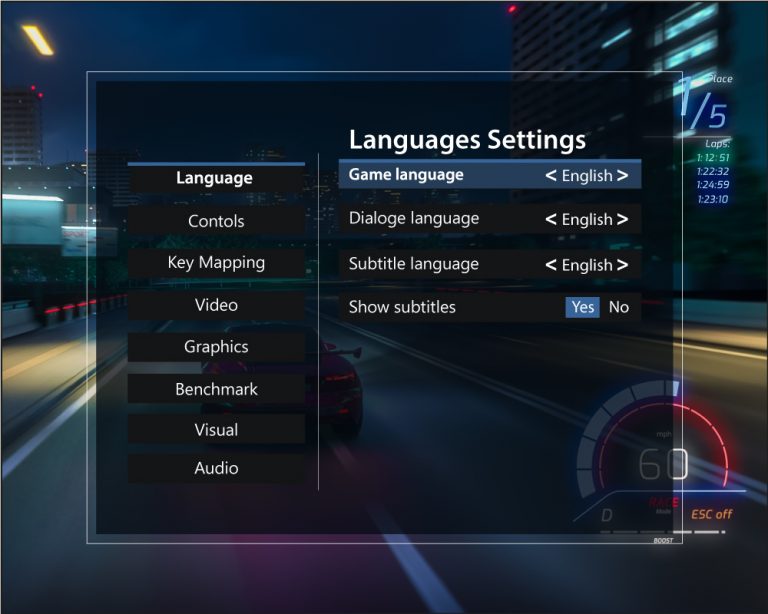
For most gamers, being able to choose from a variety of languages is completely normal and expected.
For most developers, being able to launch their game with multi-language support is a no-brainer when the goal is an international playerbase.
But the process of localizing a video game – whether translating into a different language or adapting it for a specific region – is not as easy as it might sound. There are a lot of moving parts and many potential pitfalls along the way.
The successful localization of a video game – one that increases playability for the gamer and grows the market for the developer – requires a well-structured game localization team.
In this article we will look at the key roles in video game localization, and we’ll see how they function in real production environments, and how they collaborate with internal game studio teams to keep localization efficient and under control.
When it comes to professional game localization services, these roles work together as part of a streamlined, repeatable production pipeline, not a random assortment of freelancers working in isolation with no shared vision.
Why Clear Roles Matter in Game Localization
Game localization touches almost every department within a game development organization: narrative, UI/UX, engineering, QA, and audio.
Without clearly defined responsibilities, common problems tend to pop up pretty quickly.
Terminology becomes inconsistent between onscreen interface and dialogue; last minute fixes can delay launch or updates. Linguistic errors can go unchecked in live builds; poorly synced or simply cringey voice overs can lead to ridicule and backlash from the gamer community.
A structured localization team reduces these risks by assigning ownership at every stage of the pipeline.
The end result?
A well-balanced and multi-powered squad capable of achieving elite localization success and epic playability across cultures and languages!
Localization Project Manager: The Operational Backbone
The localization project manager (LPM) is responsible for turning overall scope into execution. Like an experienced ranger of the wilds, this is the central role that coordinates the entire campaign, keeping the squad united and moving in the right direction.
The LPM’s key responsibilities include: planning schedules, milestones and language rollouts. They coordinate with linguistic talents, programmers, LQA testers, and audio teams, while acting as the main point of contact between the studio and vendors. Crucially, the LPM manages risks such as late content drops or changes in scope.
How LPMs collaborate internally
Localization Project Managers work closely with:
- Producers on release planning and priorities
- Developers and engineers on string freezes and integrations
- Narrative and UX teams to clarify context and tone
When this role is missing or underpowered, localization efforts can easily become a reactive rush. Without the LPM, teams scramble to fix issues instead of preventing them, often pushing localization to the end of the schedule.
Game Translators and Linguists: Masters of Meaning and Intent
Game translators do more than convert words between languages. They adapt meaning, tone, and intent for a specific player audience, whether this be defined by a language, nationality, culture, or other shared characteristics.
On any given day you can find this linguistic talent: translating a wide variety of texts, including UI elements, in-game tutorials, system messages as well as marketing text.
They also level-up the localization effort by adapting humor for regional contexts, fine tuning genre-specific terminology, and perfecting character voices. Like sentinels on the watch, the video game translator can also spot potentially dicey cultural or contextual issues early on in the process.
Professional game translators work closely with: style guides, glossaries, in-game lore and other world-building documentation. They thrive on in-context screenshots or playable builds, using these to dial-in the best possible linguistic nuance for each aspect of the game.
Their power for clear communication creates a natural bridge between the vision of the game’s narrative designers and the immersive playability that gamers expect.
Studios interested in the broader distinction between translation and localization may find this helpful:
Game translation vs. localization – what’s the difference?
Editors and Proofreaders: Consistency at Scale
Editors and proofreaders ensure that localization feels cohesive rather than fragmented. They produce the miracle of consistent, unified linguistic playability across cultures and languages.
Like clerics and keepers of the sacred lore, they bring order and consistency to game terminology, as well as adherence to the game developer’s style guides.
Editors and Proofreaders are experts at aligning the work of multiple translators into a single, cohesive voice that stays true to the overall vibe of the game. Like translators, they provide another level of vigilance, preventing buggy linguistic errors from going live.
Why the Editor role is critical
When these word-wizards are absent from the campaign:
- Character names may vary across systems
- UI labels and tutorial styles can mutate wildly from one language to another
- Updates and new releases can introduce inconsistent quality and tone
Editors are especially important in live-service games, where content is added continuously and maintaining consistency over months or years is a must.
Localization Engineers: Bridging Language and Code
Localization (Loc) Engineers make localization technically possible. They are the cyber mechanics, who are prepped and ready to jack in to the techno-linguistic matrix, to hyper-connect the game’s linguistic assets with the localization pipeline.
They do the heavy lifting:
Loc Engineers do all of the necessary file format transformations that prepare a game’s linguistic assets with their appropriate implementation in CAT (Computer Assisted Translation) Tools for translation and localization.
Whether the studio is working with JSONs, XML files, CSVs or Excel files to store their strings, the Loc Engineer is on-hand to make everything work throughout the technical process of localization. They may need to extract strings from non-friendly formats and re-integrate them later into the original formats once the linguistic work has been done.
For trickier issues such as fonts, text expansion and right-to-left languages, the Loc Engineer is also the go-to team member!
Loc Engineers keep the data pathways flowing and functional, working directly with Game Developers to ensure localization ready-code, and looping back with QA teams to validate text rendering and UI behavior during the LQA testing phase.
When this role is overlooked, teams face hard-coded strings, broken UI layouts, or last-minute technical debt that delays launches.
LQA Testers: Live-Simming the Player POV
Like an elite simulation unit preparing for a stratospheric real-world launch, the LQA (Linguistic Quality Assurance) testers put linguistic assets to the test and validate the localization inside the actual game build.
They check for bugs and make sure that linguistic playability stays at mission-critical levels of awesomeness.
During this phase the testers play the actual game and see how the new localized text is behaving in context (not by merely looking at a spreadsheet!). They also report back on linguistic issues (truncation, mistranslations, wrong tone), while verifying consistency across gameplay, menus and audio.
Skipping LQA is one of the most common, as well as costly, mistakes in game localization. Game Studios often discover issues only after release, leading to:
- Negative Steam or console store reviews
- Emergency patches
- Damaged player trust
For a deeper breakdown on LQA testing, check out one of our earlier articles:
What is game localization testing?
Voice Actors and Voice Directors: Bringing Characters to Life
The localization of voices within video games opens up a huge range of possibilities for fine-tuning the gaming experience for specific audiences. It also introduces new kinds of complexity that go beyond simply tweaking or translating the text.
Video Game Voice Actors
Voice Actors deliver vocal performances that match character age, emotion, and pacing. They adapt the dialogue so that it sounds natural for a given target language or regional variant. In the case of games with on-going releases, the voice actors also aim at maintaining consistency of vocal performances across sessions and updates.
Voice Directors
Voice Directors, on the other hand, are responsible for guiding the performance of voice actors, making sure that the delivery fits with the game’s overall aesthetic and narrative structure. They ensure consistency of tone across characters and scenes, and coordinate between translators, actors, and the game studio.
Without direction, even well-translated scripts can result in flat or immersion-breaking audio.
Related reading:
Video game voice-over: turning up the volume
How Localization Teams Collaborate with Game Studios
So how do all of these roles come together in collaboration with the game studio?
The key to efficient collaboration in game localization depends on shared ownership and mutual support throughout the process.
Typical collaboration touchpoints
- Narrative designers provide character context and lore
- UX/UI teams flag layout constraints early
- QA teams align functional and linguistic testing
- LiveOps teams coordinate updates and hotfixes
The most successful studios treat localization as a parallel production stream, not a post-production task.
What Happens When Roles Are Missing?
No LPM: Missed deadlines, unclear priorities, lack of alignment
No Editor: Inconsistent terminology and tone
No LQA: Player-facing bugs
No Localization Engineer: Technical delays, buggy or broken UI elements
No voice direction: Poor audio immersion
Each role exists to reduce risk, not to add overhead. As we’ve seen, the entire team combines to maximize playability and player engagement across cultures, regions and languages.
Final Thoughts: Localization Is a Team Sport
A strong game localization team is defined by clear roles, structured collaboration, and shared accountability. When each specialist knows their responsibility, and how it connects to the studio’s workflow, localization becomes predictable, scalable, and high quality.
If you’re reviewing your current setup or planning a multilingual release, it may help to discuss your pipeline with a professional game localization partner. Experienced teams can integrate with your existing tools, workflows, and release cycles to reduce friction and avoid costly rework.
If you’d like to assess your localization team structure or upcoming project scope, you can request a quote or talk to a localization expert to get practical guidance tailored to your game.